
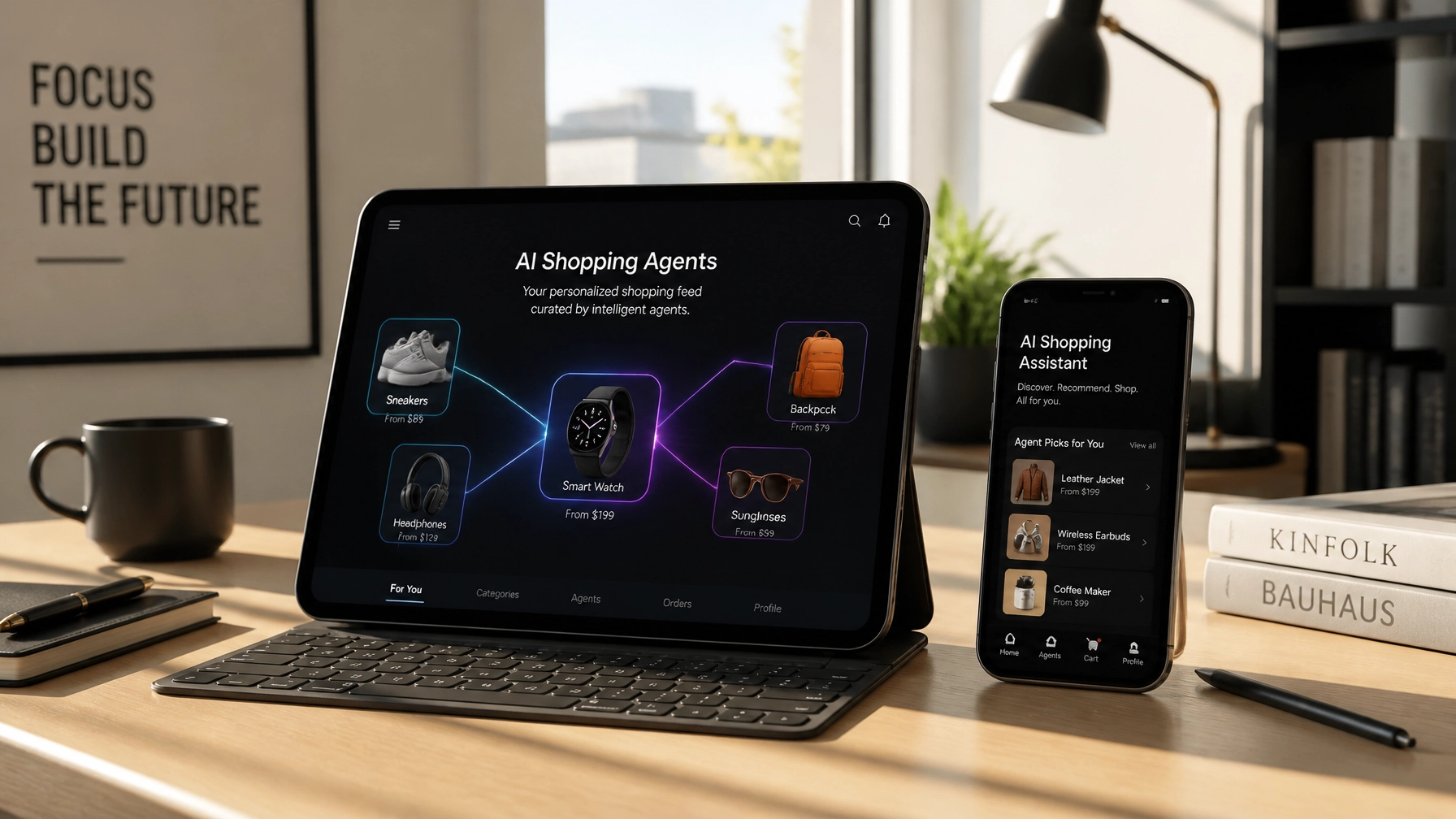
Is the traditional Meta Ads scroll becoming obsolete? We’ve all seen the shift. For years, the recipe for e-commerce growth was simple: create a thumb-stopping Reel, let Meta’s algorithm find your audience, and watch the ROAS climb. But as we move deeper into 2026, a new player has entered the chat, literally.
AI shopping agents, like Amazon’s Rufus, Walmart’s Sparky, and Meta’s own internal recommendation agents, are fundamentally rewriting the discovery journey. We aren't just scrolling feeds anymore; we’re asking agents to find the "best organic protein powder for marathon training under $50."
When discovery moves from the feed to the agent, how do you scale? Let’s dive into the data-backed reality of agentic commerce and why your Meta Ads strategy needs a technical overhaul to survive.
The 2026 Reality: By the Numbers
If you think AI shopping is still a niche trend, the data from the past 12 months says otherwise. We’ve seen an explosion in "agent-mediated" transactions that bypass traditional search and social interfaces.
- 1,200% Surge: Traffic from AI-driven sources to retail sites has surged by over 1,200% year-over-year.
- 15x Order Growth: AI-driven orders grew 15x between January 2025 and January 2026.
- High-Intent Conversion: While AI-referred traffic is currently 86% less than traditional affiliate volume, it carries a 2.47% conversion rate: often 30x higher than average retail site visitors.
- AOV Lift: AI channels are yielding an Average Order Value (AOV) boost of 20–38% compared to direct site traffic.
For a brand doing $200k/month, being invisible to these agents isn't just a tech oversight; it’s a missed opportunity of roughly $10k–$16k in incremental monthly revenue today, projected to hit $50k/month by 2028.

How Agentic Commerce Reshapes Meta Ads
Does this mean we stop running Meta Ads? Absolutely not. But it does mean the role of Meta Ads has shifted from finding the customer to amplifying the agent’s influence.
The Rise of the Sponsored Recommendation Layer
Meta is already rolling out AI agents across Instagram, Facebook, and WhatsApp. Instead of browsing Shopping Feeds, users are engaging with agents to refine their preferences. We expect Meta to monetize this via a "sponsored recommendation" layer. Your ads won't just be in the feed; they’ll be the "suggested alternative" within an AI conversation.
Advantage+ is No Longer Optional
Meta Advantage+ Shopping has effectively moved the heavy lifting of targeting and bidding inside the machine. To scale in 2026, you cannot manually out-tweak the algorithm. You win by feeding the machine superior inputs:
- Catalog Hygiene: AI agents rely on structured data. If your product attributes are incomplete, you’re invisible.
- Meta AI Connectors: These allow external AI tools to manage your campaigns and product diagnostics programmatically, bypassing the need for manual developer credentials.
Are you still manually adjusting your ad sets every morning? If so, you're competing against machines that can process millions of signals per second. It’s time to pivot to a high-signal, low-friction model.
Case Study: From $5k Ad Spend to $50k Revenue
We recently applied this "Agent-Ready" framework for a health product brand looking to boost sales e-commerce. The brand was stuck in a "ROAS trap": scaling spend lead to diminishing returns.
The Strategy:
We moved them to our commission-based model, focusing entirely on profit-first scaling. We stopped manual audience testing and focused 100% on TrueROAS attribution and catalog optimization.
Technical Execution:
- Feed Overhaul: We achieved a 98% attribute fill rate (up from 65%), ensuring AI agents could accurately "read" the product benefits.
- Conversions API (CAPI): We tightened the event match quality to 8.5/10, providing Meta's AI with near-perfect feedback loops.
- Creative-Agent Loop: We used AI-native creative that mirrored the conversational style of shopping agents.
The Results:
- Monthly Spend: Increased from $5k to $15k.
- Monthly Revenue: Scaled from $18k to $50k.
- Blended ROAS: Maintained at 3.3x despite the 3x increase in spend.
By treating Meta Ads as a data-delivery system rather than just a "billboard," we enabled the brand to capture both feed-based discovery and agent-mediated intent.

Your Technical Scaling Checklist for 2026
How do you ensure your brand is "Agent-Ready"? You know, let's face it: most brands are still optimizing for 2022. To scale your performance marketing today, you need to implement these three technical takeaways immediately.
1. Reach 95%+ Attribute Completeness
AI agents can't "see" your beautiful lifestyle photos the same way a human can. They read your data. If your shopping feed is missing material, size, flavor, or specific health benefits, an agent won't recommend you. Audit your feed today.
2. Monitor "AI Visibility" as a Core KPI
Stop looking only at ROAS. Start tracking Agent Impression Share. How often are your products the top recommendation for your target keywords? This is the leading indicator for future revenue.
3. Implement Full-Funnel CAPI
If your Meta Ads aren't receiving real-time server-side data, your Advantage+ campaigns are flying blind. Meta’s AI requires clean, fast signals to compete with external shopping agents.

Is Your Brand Ready to Speak to the Agents?
The shift to agentic commerce is the biggest change to e-commerce discovery since the invention of the newsfeed. We are moving from a world of "Discovery by Accident" (scrolling) to "Discovery by Intent" (asking).
At Positive Sparks, we don't just run ads; we build the infrastructure that allows your brand to thrive in this AI-mediated reality. Whether you're an Amazon business owner looking to boost DTC sales or a health brand looking for a commission-based partner, the goal is the same: stay visible where the decisions are being made.
How much of your current traffic is coming from AI-driven sources? Have you audited your product feed for agent-readiness this quarter? Let us know your thoughts in the comments or reach out to discuss how we can scale your brand together.


