
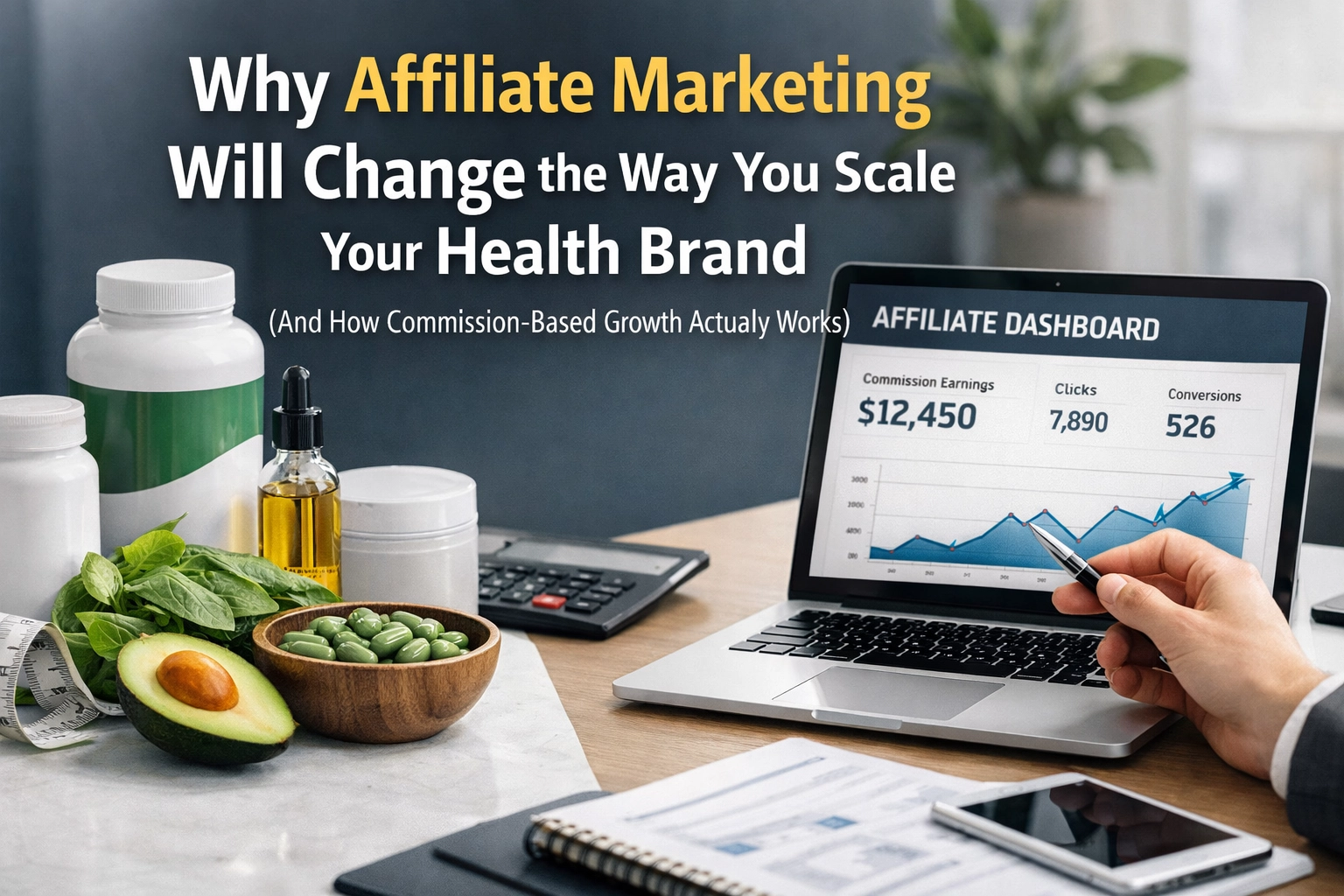
Let’s be real for a second: scaling a health brand in 2026 feels a bit like trying to run a marathon in a swimming pool. You’re working twice as hard, but the resistance from rising customer acquisition costs (CAC) and the ever-changing algorithms of Meta and Google makes it feel like you’re barely moving.
Have you ever looked at your ad spend and thought, "I’m essentially paying Mark Zuckerberg a monthly rent for customers I’m not even sure are going to stick around?" We’ve all been there. But what if we told you there was a way to flip the script? A way where you only pay when you actually make a sale, and your brand is built on a foundation of genuine trust rather than just catchy headlines?
Welcome to the visionary world of affiliate marketing for ecommerce. It’s not just a "side channel" anymore; for health and wellness brands, it’s becoming the primary engine for sustainable, high-impact growth.
Why the Health Niche is the "Affiliate Goldmine"
Why is the health sector so perfectly suited for commission-based marketing? It comes down to one word: Trust.
In the health and supplement world, customers aren't just buying a product; they’re buying a transformation, a solution to a pain point, or a boost to their longevity. They are naturally skeptical. They’ve seen the "miracle cures" and the overhyped powders. They don't want a corporate entity telling them a product works: they want a person they trust to tell them.
Research shows that influencer-driven affiliate campaigns can generate up to an 11x higher ROI than traditional digital advertising. When a nutritionist, a professional athlete, or even a highly-engaged fitness enthusiast recommends your brand, that recommendation carries a weight that a "Sponsored" post simply can't match.

The Power of the "Micro" Community
Are you still chasing the million-follower influencers? If so, you might be leaving money on the table.
In our experience at Positive Sparks, we’ve seen that the real magic happens in the "sweet spot" of micro-influencers: those with 5,000 to 50,000 followers. Why? Because these creators have built intimate, trust-based communities. Their engagement rates are often double or triple those of the "mega" stars. In the health niche, consumers view a micro-influencer’s recommendation as a tip from a knowledgeable friend, not a paid endorsement.
By leveraging influencer marketing through an affiliate model, you aren't just buying eyeballs; you’re borrowing authority. And the best part? You’re doing it through commission-based marketing, meaning you’re paying for the result (the sale), not the attempt (the click).
How Commission-Based Growth Actually Works (The Math)
Let’s talk numbers, because let’s face it, your CFO isn't going to let you scale on "vibes" alone.
The beauty of the affiliate model is the alignment of incentives. In a traditional PPC model, you pay whether the customer buys or not. In a commission-based model, your affiliates are essentially your outsourced sales force. They only get paid when you do.
But how do you know when you’re ready to turn up the volume? We generally look for a 1.3x Return on Ad Spend (ROAS) as our "green light" threshold. If you’re earning $1.30 for every $1 you spend on the channel (after commissions and product costs), you’ve found a profitable pocket.
At this stage, we look at two types of scaling:
- Vertical Scaling: This is where you increase the budget on your top-performing partners. If a specific wellness blogger is crushing it, we might increase their commission tier or provide them with a dedicated budget to run their own ads to their audience. We recommend growing these budgets by about 25% daily to avoid "shocking" the performance.
- Horizontal Scaling: This is where the visionary growth happens. Instead of just doing more of the same, we branch out. We find new "clusters" of affiliates: perhaps moving from "Yoga Instructors" to "Physical Therapists" or "Biohackers."
To keep track of all this, you need rock-solid data. We’re big fans of using 3rd party attribution apps to ensure that the affiliate getting the credit is actually the one who drove the value.
Recruiting Your Dream Team: It’s Not Just About Influencers
When people hear "affiliate marketing," they often just think of Instagram. But for a health brand to truly scale, you need a diverse ecosystem of partners. Think about these categories:
- Content Publishers: These are the SEO-driven blogs that review "The Best Magnesium Supplements of 2026." Getting a spot on these lists is pure gold for long-term organic traffic.
- Medical Professionals: Doctors, dietitians, and nurses who recommend products to their patients. This is the highest level of trust you can achieve in health product marketing.
- Cashback and Loyalty Sites: Great for capturing those "price-sensitive" customers who are right on the edge of buying but just need a 5% nudge.
- Podcasters: Health and wellness listeners are incredibly loyal. Sponsoring a segment on a niche health podcast via an affiliate link can create a steady stream of high-AOV (Average Order Value) customers.

The Positive Sparks Approach: Beyond the Transaction
We don't just see affiliate marketing as a "tactic." We see it as a way to build a brand that lasts. Let’s face it, the "churn and burn" model of DTC is dying. The brands that will win in the next five years are the ones that own their audience and have a network of advocates.
We often help our clients transition from being "Amazon-only" brands to thriving DTC powerhouses. By using an affiliate model, you can drive traffic to your own site, capture that precious first-party data, and build a relationship with the customer that Amazon simply won't let you have. If you’re looking to make that jump, our Amazon to DTC guide is a great place to start.
Actionable Steps to Start Scaling Today
Ready to put this into practice? Here is your "Starter Pack" for health brand affiliate scaling:
- Audit Your Current ROAS: Use a tool like TrueROAS to get a clear picture of what your actual margins look like. You can't set a commission rate if you don't know your numbers.
- Identify Your "Seed" Affiliates: Look at your existing customer list. Who is already shouting about your product for free? Reach out to them first.
- Set Tiered Commissions: Don't offer everyone the same rate. Give your top performers a reason to work harder. Offer a baseline of 10-15%, but create a "Platinum Tier" for those who hit specific sales targets.
- Create a "Swipe File": Make it easy for your affiliates. Give them high-quality images, pre-written captions, and talking points about your product's science. The less work they have to do, the more they will promote you.
- Focus on Education: For health products, the "Why" is as important as the "What." Host a monthly webinar for your affiliates to explain the science behind your latest formula.
What’s Your Vision for Growth?
Affiliate marketing isn't just about links and tracking codes; it's about building a community of people who believe in what you’re doing as much as you do. It’s about moving away from the "pay-to-play" noise of standard advertising and moving toward a model where everyone wins: the brand, the affiliate, and most importantly, the customer who finds a product that genuinely improves their life.
Let's face it, the future of health marketing is personal, performance-based, and partner-driven.
What’s been your biggest challenge when trying to scale your health brand? Have you tried an affiliate model before, or are you worried about "brand dilution"? Drop us a line: we’d love to hear your thoughts and see how we can help you spark some positive growth.
If you’re ready to see how a bespoke affiliate and PPC strategy can transform your ecommerce numbers, speak to us today. Let's build something visionary together.


